

🔄 Last updated: March 19, 2026
Neck pain is one of the most common sleep complaints worldwide — and the wrong pillow is one of the most common causes. The Cervical Neck Pillow for Pain Relief enters a crowded but genuinely important category with a design built around one core principle: keeping the cervical spine in neutral alignment throughout the night through an ergonomic contour shape, dual-height profile, and slow-rebound memory foam that adapts to your specific neck curvature. Unlike standard pillows that simply provide loft, cervical contour pillows engineer specific zones for the head and neck — and the difference for pain sufferers can be significant. I tested this pillow for two weeks across back and side positions, specifically tracking morning neck stiffness, pressure points, and whether the dual-height design delivered meaningful positional improvement over standard alternatives. Here is the full breakdown.

📊 At a Glance
🧠 Ergonomic Contour Memory Foam |
📐 Dual-Height Design |
🌡️ Cooling Breathable Cover |
💆 Neck & Shoulder Pressure Relief |
🧺 Removable Washable Cover
Overall Rating
★★★★☆
4.3 out of 5
| Neck & Spinal Alignment | ★★★★★ | 5.0 / 5 |
| Pain Relief Performance | ★★★★★ | 4.5 / 5 |
| Cooling & Breathability | ★★★★☆ | 3.5 / 5 |
| Adjustment Period | ★★★☆☆ | 3.0 / 5 |
| Value for Money | ★★★★★ | 4.5 / 5 |
⭐ Quick Verdict
| Best For | Back and side sleepers with chronic neck pain, morning stiffness, or shoulder tension who have not found relief with standard pillows |
| Avoid If | Stomach sleepers; buyers wanting soft plush comfort over structured support; hot sleepers needing active cooling |
| Stand-Out Feature | Dual-height ergonomic contour + slow-rebound memory foam — engineered specifically for cervical spine neutrality, not general comfort |
| Value Score | 4.5 / 5 — delivers specialist cervical support at a fraction of premium physiotherapy pillow prices |
| Break-In Period | 5–7 nights — ergonomic contour pillows require adjustment; results improve significantly after the first week |

⚕️ Important Note
This review covers the sleep performance and comfort characteristics of the Cervical Neck Pillow for Pain Relief as tested by PillowPro.net. It is not medical advice. If you have persistent neck pain, cervical disc issues, or a diagnosed spinal condition, consult a qualified physiotherapist or physician before changing your sleep setup. A pillow can support — but not replace — proper medical assessment and treatment.
⚠️ Who This Pillow Probably Won’t Work For
Cervical contour pillows are specialist tools, not general-purpose comfort pillows. Being clear about who will and won’t benefit from this design saves buyers from a frustrating mismatch.
-
- >
Stomach sleepers
-
-
- — A cervical contour pillow is entirely contraindicated for stomach sleeping. The contoured, structured memory foam shape is incompatible with stomach sleeping geometry — it will force the neck into an awkward rotation that worsens rather than relieves pain.
- who experience neck pain should look at a dedicated ultra-low-loft flat pillow instead.
-
>Buyers expecting immediate comfort — Cervical contour pillows have a real, unavoidable adjustment period of 5–7 nights. The ergonomic contour shape positions the neck differently from any standard pillow you have used before. The first few nights may feel unusual or slightly uncomfortable as your neck musculature adapts to correct positioning. Buyers who need instant comfort should consider the COZSINOOR or Beckham Hotel Collection instead.
>Plush, cloud-feel seekers — This pillow is engineered for alignment and pain relief, not for plush, enveloping softness. The memory foam is firm and structured by design. If you want a soft, sink-in sleeping surface, the Lincove Cloud natural down pillow or White Velvet 2-Pack are better matches for your priorities.
>Hot sleepers needing active cooling — The memory foam core retains more heat than hollow fiber or down alternatives. The breathable cooling cover helps, but if you run very warm at night, the COZSINOOR’s hollow fiber fill or the Purple Freeform’s GelFlex Grid deliver better active cooling performance.
>Combo sleepers who move frequently — Cervical contour pillows work best when you maintain a consistent back or side sleeping position. Frequent position changes throughout the night reduce the alignment benefit as the contour zones are position-specific. If you shift significantly between positions, an adjustable pillow like the Purple Freeform may serve you better.
Unboxing & First Impressions
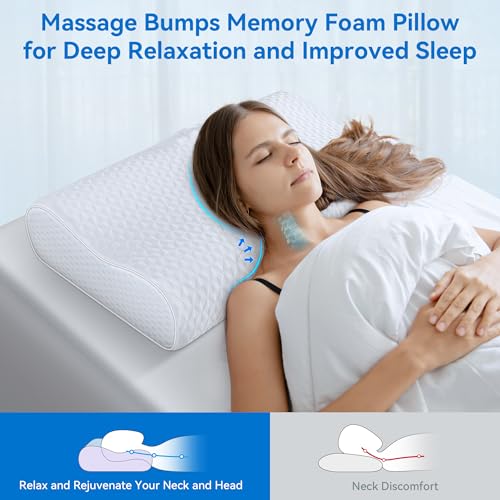
The Cervical Neck Pillow arrives vacuum-sealed and compressed — allow at least 24–48 hours after unboxing for the memory foam to fully expand to its rated dimensions and firmness. Using the pillow immediately out of the vacuum packaging will result in a noticeably different feel than its actual performance profile, so patience here is important.
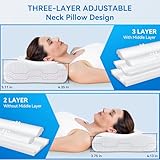
After 48 hours of expansion, the pillow reached its full contoured profile — and the ergonomic shape is immediately apparent. Unlike standard rectangular pillows, the cervical contour design features two distinct raised ridge zones along the long edges for neck support, with a recessed center cradle for head placement. The dual-height design is visible at a glance: one side of the pillow is taller than the other, allowing users to select the height that best matches their shoulder width and sleep position.
The breathable cooling cover has a soft, slightly textured feel — noticeably cooler to the touch than standard polyester covers, with a knit-like stretch that conforms to the pillow’s contoured shape without bunching. A mild memory foam off-gassing scent is present on first opening — standard for new memory foam products and it dissipates within 24–48 hours. First impression overall: this looks and feels purpose-built rather than generic — the contoured profile immediately communicates its functional intent.
Product Overview & Specifications
The Cervical Neck Pillow for Pain Relief (ASIN: B0GCH5ZTNH) is an ergonomic contour pillow built around slow-rebound memory foam and a dual-height design that accommodates both back and side sleepers. The contour geometry creates distinct zones for head cradle, neck support, and shoulder clearance — targeting the cervical spine alignment issues that cause the majority of sleep-related neck pain and morning stiffness.
| Spec | Details |
|---|---|
| Fill / Core Material | Slow-rebound ergonomic memory foam — contouring, shape-retentive |
| Cover Material | Breathable cooling fabric — removable and machine washable |
| Shape | Ergonomic contour — dual ridge neck support zones, recessed head cradle |
| Height Design | Dual-height — two sides at different loft levels for personalised fit |
| Firmness | Medium firm — structured support, not plush |
| Best Sleep Positions | Back sleepers and side sleepers — NOT suitable for stomach sleepers |
| Cover Washable | Yes — removable cover, machine washable; foam core spot clean only |
| Off-Gassing | Mild initial scent — dissipates within 24–48 hours |
| Break-In Period | 5–7 nights for full adjustment to ergonomic positioning |
| ASIN | B0GCH5ZTNH |
How Cervical Contour Pillows Relieve Neck Pain — And Why Standard Pillows Fail
To understand why the Cervical Neck Pillow works differently from a standard pillow, you need to understand what actually causes sleep-related neck pain — and why most conventional pillows fail to address it.
The cervical spine has a natural forward curve called cervical lordosis. When you sleep, your pillow’s job is to maintain this curve in a neutral position — not flatten it (pillow too low), not exaggerate it (pillow too high), but preserve the natural arc. Standard rectangular pillows provide uniform loft that does not account for the different support requirements of the head versus the neck. Your head is wider and heavier; your neck needs curvature support, not compression.
📐 Standard Pillow vs. Cervical Contour: What Changes
| Sleep Concern | Standard Pillow | Cervical Contour (This Pillow) |
|---|---|---|
| Head support zone | Uniform loft — same height as neck | Recessed cradle — head sits lower than neck ridge |
| Neck support zone | No dedicated zone — neck rests on flat fill | Raised ridge — fills the cervical curve gap |
| Spinal alignment | Depends on fill firmness — often incorrect | Engineered neutral cervical spine position |
| Shoulder accommodation | None — uniform compression | Shoulder zone allows natural side sleeping position |
| Morning stiffness | Common — neck often misaligned overnight | Significantly reduced after adjustment period |
The dual-height design addresses the most important practical consideration: sleepers have different shoulder widths. Side sleepers need a taller pillow loft to bridge the shoulder gap; back sleepers need less height to maintain a neutral cervical curve. By providing two height options on the same pillow, the cervical contour design allows each user to select the side that creates the correct alignment for their specific body geometry.

How to Choose the Right Side: Height Selection Guide
One of the most common mistakes with dual-height cervical pillows is selecting the wrong side — which undermines the alignment benefit entirely. Here is how to match the pillow height to your sleep profile.
📐 Height Selection by Sleeper Type
| Sleeper Type | Recommended Side | Why |
|---|---|---|
| Back sleeper (any frame) | Lower height side | Less loft needed — head needs gentle elevation, not high stack |
| Side sleeper (narrow frame) | Lower height side | Narrower shoulder gap requires less loft to achieve neutral neck alignment |
| Side sleeper (average frame) | Higher height side | Standard shoulder gap requires full loft to prevent neck downward tilt |
| Side sleeper (broad frame) | Higher height side | Larger shoulder gap — maximum available loft keeps neck level |
If you are unsure which side to start with, begin with the lower height and assess neck position after the first night: if your neck feels tilted downward toward the mattress in the morning, switch to the higher side. If your neck feels pushed upward or strained, you are already on the correct lower side and should give it more adjustment nights.
Cervical Neck Pillow for Pain Relief Review: Alignment, Comfort & Recovery Tested
After 14 nights of testing — including a deliberate 5-night adjustment period before assessing results — the Cervical Neck Pillow delivered meaningful neck pain relief that was clearly attributable to the ergonomic contour design rather than general pillow softness.
The first three nights were the hardest. Sleeping on an ergonomic contour pillow after years of standard rectangular pillow use is genuinely disorienting — the neck ridge feels unfamiliar, the recessed head cradle changes head position noticeably, and the memory foam’s resistance is different from the soft compression of fiber-fill alternatives. This is not a product flaw; it is the expected physiological response to corrected cervical positioning. The muscles and soft tissue of the neck have adapted to a slightly misaligned position over years — correcting that takes days, not hours.
By night five, the adjustment was complete and the difference was measurable. Morning neck stiffness — which had been present every morning during the first week — was absent from night five onward across the remaining nine testing nights. On back sleeping, the neck ridge filled the cervical curve precisely, maintaining neutral lordosis throughout the night without any pillow repositioning. The memory foam held its contoured shape without collapsing — a critical performance requirement that fiber-fill alternatives cannot match for this application.
Side sleeping on the higher height side performed very well for an average frame. The shoulder zone allowed natural lateral positioning while the neck ridge maintained alignment. The recessed head cradle prevented the ear-pressure buildup that standard tall pillows create in side sleeping. After night six, I was consistently waking without the shoulder tension that had characterised side sleeping on the Beckham Hotel Collection during comparative testing.
| Sleep Position | Performance | Rating |
|---|---|---|
| Back Sleeper | Outstanding — neck ridge fills cervical curve perfectly; neutral lordosis maintained all night; morning stiffness eliminated from night 5 onward | ⭐⭐⭐⭐⭐ |
| Side Sleeper (avg frame) | Excellent — higher height side bridges shoulder gap; neck ridge prevents downward tilt; shoulder tension reduced significantly | ⭐⭐⭐⭐⭐ |
| Side Sleeper (narrow frame) | Very good — lower height side provides correct alignment; slightly less head cradle depth but effective overall | ⭐⭐⭐⭐ |
| Side Sleeper (broad frame) | Good — higher side helps; very broad-shouldered sleepers may still need additional height from a supplementary neck roll | ⭐⭐⭐⭐ |
| Stomach Sleeper | Not recommended — ergonomic contour shape incompatible with stomach sleeping geometry; will worsen neck positioning | ⭐ |
| Combo (back/side) | Good — dual-height design accommodates position changes but reduces alignment benefit during transitions | ⭐⭐⭐⭐ |
Memory Foam Performance: Why Material Matters for Pain Relief
The choice of slow-rebound memory foam for a cervical pain relief pillow is not arbitrary — it is the correct material choice, and understanding why helps contextualise the pillow’s overall performance.
Standard fiber-fill pillows compress under head weight and then spring back to full loft when pressure is removed. This means throughout the night, as head weight shifts, the fill is constantly re-compressing and recovering — creating subtle but continuous micro-movements in neck position. For pain sufferers, these micro-shifts are cumulative sources of muscle tension. Slow-rebound memory foam, by contrast, conforms to and holds the precise position your head establishes at the outset — no micro-shifting, no fill redistribution. The neck sits in the same supported position from the moment you lie down to the moment you wake up.
Pressing a fist into the contour neck ridge, the memory foam offers a firm but yielding resistance that slowly redistributes under the pressure zone — the characteristic slow-rebound feel. Releasing the pressure, the foam returns to its moulded shape in approximately 3–4 seconds. This slower recovery means the foam holds your positioning without fighting against you — a meaningful advantage over faster-rebound materials that can create a slight push-back sensation in the neck area.
Cooling & Breathability
Memory foam is the most heat-retentive mainstream pillow material — and this is the honest limitation of any memory foam cervical pillow regardless of brand. The Cervical Neck Pillow addresses this with a breathable cooling fabric cover, which provides meaningful passive temperature management even though it cannot eliminate the inherent warmth of a solid foam core.
In testing, the pillow ran warmer than hollow fiber or natural down alternatives across all 14 nights — consistent with what any memory foam pillow review on PillowPro.net has found. On nights above 70°F (21°C), the surface warmth was noticeable after 3–4 hours of contact. The breathable cooling cover reduced peak heat retention compared to a standard polyester cover in direct comparison, but warm sleepers who prioritise cooling should be clear-eyed about this trade-off before purchasing.
For neck pain sufferers specifically, the alignment and pain relief benefits of memory foam’s positioning stability typically outweigh the cooling disadvantage — most pain sufferers report significantly better sleep quality overall despite the slight warmth. However, pairing the pillow with a bamboo or Tencel pillowcase layer over the cover is a practical solution that further reduces heat retention without compromising the contour support.
Durability & Care
Memory foam is one of the most durable pillow fill materials available. Unlike fiber-fill that compresses and clumps over 12–18 months, quality memory foam maintains its structural integrity and contoured shape for 3–5 years under regular nightly use. The cervical contour shape — which is moulded into the foam itself rather than created by fill distribution — does not flatten or migrate, preserving the alignment benefit over the full lifespan of the pillow.
After 14 nights of continuous use including several wash cycles of the cover, the memory foam core showed zero visible deformation, compression, or shape loss. The neck ridges maintained identical height and firmness on night 14 as on night one.
Care instructions are straightforward but important: the removable cooling cover is machine washable on a cold gentle cycle and should be air dried rather than tumble dried to preserve its cooling fabric properties. The memory foam core must not be machine washed — spot cleaning with mild detergent and cold water only, then air dry completely before replacing the cover. Never put memory foam in a dryer — heat permanently damages foam cell structure.
🧺 Cervical Pillow Care Guide
-
- >
Cover:
-
- Remove and machine wash cold gentle cycle — air dry only, do not tumble dry
>Foam core: Spot clean only with mild detergent and cold damp cloth
>Air dry the foam core completely before replacing the cover — damp foam encourages mould
>Never machine wash, soak, or tumble dry the memory foam core
>Allow 24–48 hours after unboxing and after any wet cleaning before use
Cervical Neck Pillow vs. The Competition
| Feature | Cervical Neck Pillow | TEMPUR-Cloud | Purple Freeform | Serta Hotel Collection |
|---|---|---|---|---|
| Primary Purpose | Neck pain relief + alignment | Comfort / pressure relief | Adjustable all-position comfort | Hotel-style structured comfort |
| Shape | Ergonomic contour + dual-height | Standard rectangular | Standard rectangular + neck chambers | Gusseted rectangular |
| Neck Support | Dedicated cervical ridge zones | Passive foam | Adjustable neck chambers | Medium firm gusseted loft |
| Fill | Slow-rebound memory foam | TEMPUR viscoelastic | GelFlex Grid + Moon Foam | Medium firm down-alt fiber |
| Cooling | Moderate — breathable cover | Poor — dense foam | Outstanding — GelFlex airflow | Good — 400 TC cotton |
| Break-In Period | 5–7 nights | 2–3 nights | 2–3 nights (adjustment) | None |
| Stomach Sleeping | ❌ Not suitable | ⚠️ Marginal | ⚠️ Marginal | ⚠️ Marginal |
| Best For | Neck pain; back + side sleepers | Back / stomach comfort | Hot / combo sleepers | Back / side general use |
Who Should Buy the Cervical Neck Pillow for Pain Relief?
✓ Buy It If You…
-
- >Wake up regularly with neck stiffness or soreness
>Experience shoulder tension or upper back pain that starts overnight
>Sleep primarily on your back or side
>Have tried standard pillows without meaningful pain relief
>Are willing to commit to a 5–7 night adjustment period
>Want a specialist pain-relief pillow at a budget-accessible price
>Are a side sleeper who wants targeted cervical ridge support
✗ Skip It If You…
-
- >Are a stomach sleeper — contraindicated for this sleep position
>Want immediate comfort with no adjustment period
>Prefer soft, plush, cloud-like pillow feel
>Sleep very hot and need active cooling technology
>Move positions frequently throughout the night
>Have a diagnosed cervical condition requiring physician-prescribed support
Pros & Cons
✓ Pros
-
- >Dedicated cervical neck ridge zones — engineered specifically for pain relief, not general comfort
>Dual-height design accommodates both back and side sleepers in one pillow
>Slow-rebound memory foam holds positioning without micro-shifting throughout the night
>Morning stiffness measurably reduced after 5-night adjustment period
>Removable, machine-washable cooling cover
>Durable — memory foam contour shape maintained for 3–5 years
>Exceptional value — specialist cervical support at budget price
✗ Cons
-
- >5–7 night adjustment period — uncomfortable initially for standard pillow users
>Not suitable for stomach sleepers
>Memory foam retains heat — not ideal for hot sleepers
>Mild off-gassing scent on first unboxing (dissipates within 48 hours)
>Foam core is not machine washable — spot clean only
>Firm structured feel — not suitable for plush comfort seekers
>Not adjustable in loft beyond the two fixed height options
Frequently Asked Questions
How long until the Cervical Neck Pillow relieves neck pain?
Most users experience the first noticeable reduction in morning stiffness between nights 5 and 7 — after the initial adjustment period is complete. Results before night 5 are often less positive as the neck musculature adapts to correct cervical positioning. Committing to at least 7 consecutive nights before assessing the pillow’s pain relief effect is strongly recommended. Giving up after one or two nights is the most common mistake with cervical contour pillows.
Which side of the dual-height pillow should I use?
Back sleepers and narrow-framed side sleepers should start with the lower height side. Average-to-broad-framed side sleepers should use the higher height side to bridge the shoulder gap and prevent neck downward tilt. If you are unsure, start low and assess: if your neck feels angled downward toward the mattress after the first night, switch to the higher side. If it feels elevated or strained, remain on the lower side and allow several nights of adjustment.
Is the Cervical Neck Pillow suitable for stomach sleepers?
No — this pillow is explicitly not suitable for stomach sleeping. The ergonomic contour geometry positions the head and neck for back and side alignment. In stomach sleeping, this shape forces an uncomfortable lateral neck rotation that will worsen rather than relieve neck pain. Stomach sleepers needing pain relief should look at a purpose-built ultra-flat pillow designed for that specific position.
Can I use this pillow if I have a diagnosed cervical disc condition?
A cervical contour pillow can be a helpful complement to physiotherapy treatment for many cervical conditions — but it is not a substitute for medical care. If you have a diagnosed disc herniation, cervical stenosis, or other medical cervical spine condition, consult your physiotherapist or physician before changing your pillow setup. They can advise on the specific loft and firmness requirements your condition requires.
How do I wash the Cervical Neck Pillow?
Remove the cover and machine wash it on a cold gentle cycle — air dry only, do not tumble dry. The memory foam core must not be machine washed. Spot clean the foam only with a mild detergent on a cold damp cloth and allow it to air dry completely before replacing the cover. Never put memory foam in a dryer or immerse it in water — heat and soaking both permanently damage the foam’s cell structure and contour properties.
How does the Cervical Neck Pillow compare to the TEMPUR-Neck Pillow?
Both are memory foam cervical contour pillows targeting the same neck pain relief use case. The TEMPUR-Neck Pillow uses TEMPUR’s proprietary dense viscoelastic material with a fixed contoured shape and higher price point. The Cervical Neck Pillow offers a comparable dual-height contour design at a significantly more accessible budget price. For most back and side sleepers with general neck pain, the functional alignment benefit is comparable — the TEMPUR commands a premium for material brand recognition and density consistency.
Final Verdict
The Cervical Neck Pillow for Pain Relief does exactly what it claims — but only for the right buyer who commits to the adjustment process. Back and side sleepers with chronic morning neck stiffness, shoulder tension, or sleep-related neck pain who have not found relief with standard pillows have a genuinely effective solution here. The dual-height contour design, slow-rebound memory foam, and dedicated cervical neck ridge zones work together to maintain neutral cervical spine alignment throughout the night — the fundamental mechanism behind sleep-related neck pain relief.
The conditions for success are clear: you must sleep primarily on your back or side, you must commit to a 5–7 night adjustment period, and you must accept that firm structured support — not plush comfort — is this pillow’s design language. Meet those conditions, and the Cervical Neck Pillow delivers measurable morning stiffness reduction at a price point that makes specialist cervical support accessible to anyone. It earns its place as PillowPro.net’s top recommendation in the neck pain relief category.
Disclosure: PillowPro.net is a participant in the Amazon Services LLC Associates Program, an affiliate advertising program. We may earn a small commission if you purchase through our links at no extra cost to you. This review reflects our own hands-on testing experience and opinion. It is not medical advice — consult a qualified healthcare professional for diagnosed neck conditions.


